Healing
Healing is not linear, and that is not failure
Some weeks feel like progress; others feel like everything came back. Returning to an old feeling doesn't undo the work — it usually means a part of you is finally safe enough to be felt.

Blogs & Resources
A quiet shelf of small companions — reflections to sit with, tools to reach for, words that understand, music that walks beside you, and stories to carry like a friend.
Healing
Some weeks feel like progress; others feel like everything came back. Returning to an old feeling doesn't undo the work — it usually means a part of you is finally safe enough to be felt.
Daily living
On heavy days, the goal isn't the whole to-do list. It's one glass of water, one open window, one message sent. Small steps are not a lowered standard — they are how momentum begins.
Anxiety
Anxiety rarely shows up to ruin things. It shows up as an old alarm that learned the world needed watching. Getting curious about what it guards is often gentler than fighting it.
Low mood
Sadness often carries information — about loss, unmet needs, or a life that has drifted from what matters. Making room for it, rather than rushing past it, is where the shift usually begins.
Relationships
A boundary isn't a wall between you and the people you love. It's the line that lets you stay close without disappearing. Saying what you can and cannot hold is an act of honesty.
Anger
Underneath heat there is frequently hurt — a need that went unseen for a long time. Naming the hurt beneath the anger changes what you do with it.
Short reads
Brief pieces on the things that come up most often — anxiety, boundaries, low evenings, and what beginning therapy actually looks like.
Anxiety
A surge of anxiety is, at its core, a chemical event. When the alarm fires, the body floods with stress hormones — and if nothing new is added to the fire, that first physical wave moves through in roughly ninety seconds.
What keeps it going is usually the second layer: the thoughts about the anxiety. Why am I like this. What if it gets worse. Everyone can tell. Each of those quietly presses the alarm again.
So the practice is simple, though not easy. When the wave arrives, set it a short timer in your mind. Breathe out longer than you breathe in. Say to yourself: this is a wave, and waves move. Let the sensations be loud without arguing with them.
You are not trying to stop the feeling. You are trying to stop feeding it — and then noticing, afterwards, that you stayed and it passed.
Teens & young adults
Not every struggle announces itself. Sometimes there is no crisis to point to — only a low hum: sleeping oddly, scrolling for hours, snapping at people you love, feeling flat about things that used to matter.
It's common to think therapy is for people with bigger problems. But 'off' is information. It usually means something is being carried without being spoken — pressure to perform, a friendship that changed, a home that feels loud, a version of yourself you're expected to keep up.
You don't need a diagnosis or a dramatic reason to want support. Wanting to understand yourself is reason enough.
A first step can be small: writing down what the last few weeks have actually felt like, then telling one person you trust the true version instead of the shorter one.
Daily living
Hard days rarely improve through effort at 11 p.m. They improve through small anchors that ask very little of you.
First, one closing act. Put the laptop away, wash your face, change your clothes — a signal to the body that the working part of the day has ended.
Second, one honest sentence. Write down what today actually was, without editing it into something more acceptable. Unspoken days tend to stay awake with us.
Third, one kind thing. Tea, a familiar song, five minutes of a page you've read before. Not a reward for productivity — simply care, given because you exist.
Three anchors, five minutes. On the days when nothing else is possible, this is still enough.
Relationships
If refusing something makes your chest tighten, it's usually not a character flaw. Somewhere earlier, agreeing kept things calm — and keeping things calm kept you connected.
That strategy made sense then. The cost shows up later: resentment, exhaustion, and relationships built on a version of you that never disagrees.
Boundaries are not distance. They're what let you stay close honestly. Try the smallest possible version first: 'I can't do that today, but I can on Thursday.' Notice that the relationship usually survives it.
The discomfort you feel while saying no is not a sign you did something wrong. It is often just the feeling of doing something new.
Healing
A first session is mostly getting to know each other. There is no test, no requirement to explain your whole life, and no need to arrive with the right words.
We usually talk about what brought you here now, what has been hardest lately, and what you hope might feel different. We also cover the practical parts — confidentiality, how sessions work, what you can expect from me.
You are allowed to say 'I don't know'. You are allowed to cry, to be awkward, to sit in silence, or to talk about something small first because the big thing feels too big.
Nothing has to be resolved that day. The first session is only about beginning — and about checking whether this feels like a person you could walk with.
Self-compassion
Most of us hold a private voice far harsher than anything we'd say aloud to someone we love. It often sounds like motivation — but shame rarely builds anything lasting.
Try this: think of what you'd say to a close friend in exactly your situation. Not advice, not fixing — just the tone. Then say that same sentence to yourself, even if you don't yet believe it.
It feels artificial at first, and that's expected. Kindness towards yourself is a language you may not have been taught; fluency comes with repetition.
Over time, that softer voice becomes something you can return to on the days when the harsh one is loudest.
Reach for this
None of these replace support or therapy — they are steadying hands for the minutes in between.
Pocket list
From elsewhere
A small, carefully chosen shelf of articles from established health and mental health organizations — all published within the last few years.
Bookshelf
A mix of everything — fiction, memoir, thrillers, comics, poetry and mental health writing. Well-loved bestsellers, not textbooks. Borrow one, read a chapter, leave the rest for later if you need to.

Mental health
Dr Julie Smith · 2022
A Sunday Times bestseller. Bite-sized, genuinely practical tools for low mood, anxiety and self-criticism.

Mental health
Bessel van der Kolk · 2014
The landmark bestseller on how trauma lives in the body — and the many routes back to safety.

Mental health
Dr Judson Brewer · 2021
A New York Times bestseller on how worry becomes a habit loop, and how curiosity interrupts it.

Illustrated non-fiction
Liz Fosslien & Mollie West Duffy · 2022
On uncertainty, comparison, burnout and anger — warm, illustrated and very readable.

Non-fiction
Dr Pooja Lakshmin · 2023
A grounded corrective to wellness culture, with boundaries and values at the centre.

Non-fiction
Jonathan Haidt · 2024
A #1 bestseller on adolescence, phones and social media. Worth reading, and worth debating.

Memoir
Stephanie Foo · 2022
A bestselling memoir of healing from complex trauma — honest about how non-linear recovery is.

Memoir
Tara Westover · 2018
A #1 New York Times bestseller about family, loyalty, and the cost of becoming your own person.
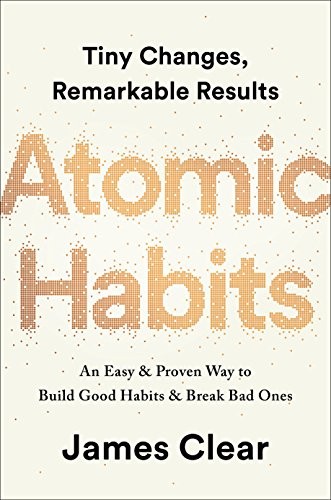
Self-development
James Clear · 2018
The most practical book on tiny changes — useful when motivation isn't available.

Fiction
Matt Haig · 2020
A bestselling novel about regret, other lives, and finding a reason to stay.

Fiction
Madeline Miller · 2011
A beloved bestseller on love, devotion and grief — beautiful prose, big feelings.

Fiction
Taylor Jenkins Reid · 2017
A word-of-mouth bestseller about identity, ambition and the stories we tell about ourselves.

Literary fiction
Sally Rooney · 2018
Two young people, misread signals and quiet loneliness. Sharp on how hard it is to say what you need.

YA fiction
John Green · 2017
A #1 bestseller written from inside intrusive thoughts and OCD — tender rather than tragic.

YA fiction
Jennifer Niven · 2015
A bestselling story of grief and depression in adolescence. Read it with someone if you can.

Fantasy / heist
Leigh Bardugo · 2015
Pure escape — a bestselling fantasy heist with a found-family crew you'll want to stay with.

YA thriller
Karen M. McManus · 2017
A #1 bestselling whodunnit set in high school. Fast, twisty, hard to put down.

Thriller
Alex Michaelides · 2019
A #1 bestselling psychological thriller set in a secure unit — gripping, with a real ending twist.

Graphic novel
Alice Oseman · 2019
A bestselling comic about first love, friendship and gentleness between teenage boys.

Graphic memoir
Marjane Satrapi · 2000
A classic graphic memoir of growing up during upheaval — funny, fierce and deeply human.

Graphic novel
Art Spiegelman · 1991
The Pulitzer-winning graphic novel on survival, memory and inherited pain.

Comic (younger teens)
Raina Telgemeier · 2019
A #1 bestselling comic about anxiety, stomach aches and therapy — brilliant for younger teens.

Poetry
Rupi Kaur · 2015
A bestselling collection on hurt, love and healing — short poems for days with little attention.
Books and articles can accompany you, but they can't know you. If something you read stirs a lot up, that's worth bringing to a session.
Sound as company
Tell me how you're feeling — in your own words — and I'll offer a small handful of songs across languages to keep you company. Music won't solve the feeling, but it can make it a little less lonely to carry.
A gentle note
These writings and tools are for support and reflection, not a substitute for professional care. If you are in crisis or at immediate risk, please contact local emergency services or reach out to someone nearby who can stay with you.
If something here felt close to your own experience, you are welcome to bring it into a session.
Share your story